The Enduring Appeal of Women's Test Cricket: Unpacking the Nuances of the Longest Format
Test cricket, often hailed as the purest form of the game, demands unparalleled skill, patience, and strategic depth. It's a format where individual brilliance shines over five gruelling days, and the ebb and flow of a match can shift dramatically with every session. While men's Test cricket enjoys widespread prominence, women's Test cricket holds a special place, offering an equally captivating spectacle of endurance and tactical play. Though less frequent on the international calendar compared to its shorter formats like One Day Internationals and Twenty20s, it remains a pinnacle for many athletes.
For those new to the nuances, or seasoned fans curious about the specifics, it's worth exploring the subtle yet significant differences that tailor the longest format for female athletes. While fundamentally adhering to the Laws of Cricket, women's Test matches feature distinct playing conditions regarding match duration, field dimensions, and even the equipment used. These adaptations are crucial for fostering competitive balance and showcasing the unique strengths of the women's game. To fully appreciate its depth, let's delve into these key distinctions.
Understanding the Rules: Duration and Pace of Play in Women's Test Cricket
At first glance, women's Test cricket mirrors its male counterpart with four innings played between two teams of eleven players, culminating in a win, loss, or draw. However, a primary and immediately noticeable difference lies in the match duration and the expected pace of play:
- Match Length: Unlike men's Test matches, which traditionally span five days, women's Tests are typically contested over a maximum of four days. This reduction requires teams to operate with a heightened sense of urgency, often leading to more aggressive declarations or quicker scoring rates to push for a result within the shorter timeframe.
- Overs Per Day: To compensate for the shorter match duration and ensure sufficient play, the expectation for overs per hour is higher in the women's game. While men's Tests aim for 15 overs per hour, women's Tests target 17 overs per hour. This translates to a full day's play in women's Test cricket comprising 100 overs, as opposed to the 90 overs in men's Tests. This intensifies the demands on players, requiring sustained concentration and physical exertion for longer periods within each day.
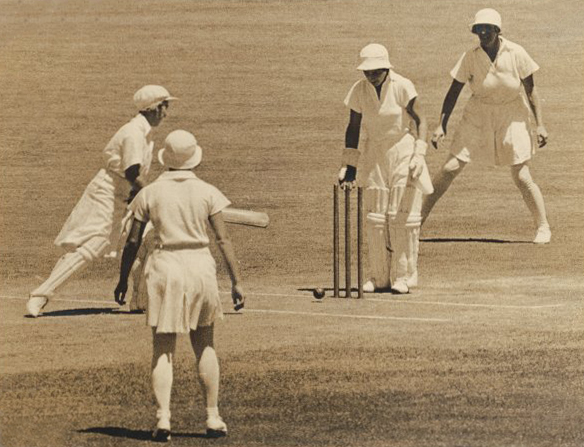
These adjustments reflect a conscious effort by the International Cricket Council (ICC) and national boards to balance the rigours of the Test format with the practicalities of the international women's cricket calendar, which is often more congested with shorter format tournaments. The earlier historical matches, such as the inaugural women's Test between England and Australia in December 1934, were also three-day contests, indicating a long-standing tradition of tailored match lengths. For a deeper dive into this fascinating journey, read A Brief History of Women's Test Cricket: From 1934 to Modern Play.
Tailored Equipment and Field Dimensions: Shaping the Game
Beyond the fundamental rules of play, some of the most impactful differences in women's Test cricket relate to the physical environment and equipment. These are not arbitrary changes but carefully considered adaptations designed to optimize the game for female athletes:
Field Size: Optimising for Action
The playing area in women's Test matches is notably smaller than in men's cricket. The boundaries must be set between 55 and 70 yards (50.29 and 64.01 metres) from the centre of the pitch. This contrasts with men's Tests, where boundaries typically range from 65 to 90 yards (59.44 to 82.30 metres).
- Impact on Play: A smaller field naturally leads to more opportunities for boundaries. This can encourage more attacking batting, as finding the gaps or clearing the ropes becomes a more achievable feat. For fielders, it means quicker reaction times and precision throwing become even more critical, as the ball reaches the boundary faster. From a strategic perspective, captains might set more aggressive fields, knowing that the risk of conceding a four is higher but also that the chances for run-outs are amplified.
- Fan Experience: The reduced field size can contribute to a more dynamic and action-packed game, potentially increasing excitement for spectators with more frequent fours and sixes.
The Cricket Ball: Lighter, Smaller, and Just as Potent
Perhaps one of the most significant yet often overlooked differences is the cricket ball itself. In women's Test cricket, a slightly smaller and lighter ball is used compared to the men's game. The Laws of Cricket stipulate that women should use a ball weighing between 4 15⁄16 and 5 5⁄16 ounces (139.98 and 150.61 grams). In contrast, men's cricket balls typically weigh between 5.5 and 5.75 ounces (155.9 to 163.0 grams).
- Ergonomics and Performance: This modification is primarily ergonomic. A slightly lighter and smaller ball is generally easier for players with smaller hands to grip, control, and propel. This can enhance both bowling and batting performance:
- Bowling: Spin bowlers might find it easier to impart revolutions on the ball, potentially generating more turn. Pace bowlers can maintain consistent lines and lengths more effectively.
- Batting: While seemingly a minor change, a lighter ball can travel further with the same amount of power, contributing to the increased boundary count and exciting strokeplay often seen in women's cricket. It also allows batters to feel more comfortable executing a wider range of shots.
- Safety: While not the sole reason, a slightly lighter ball can also contribute to player safety, especially when factoring in the high speeds and impacts involved in the game.
The Evolution and Future of Women's Test Cricket
The tailored conditions in women's Test cricket are not concessions but considered refinements that celebrate the unique physiological attributes and skill sets of female athletes. They ensure the game remains challenging, competitive, and highly entertaining. These differences create a distinct flavour of Test cricket, one that is often characterized by energetic performances and bold decision-making, partly driven by the four-day format and smaller boundaries.
The skill level in women's Test cricket is exceptionally high, with players demonstrating immense talent and dedication. Recent matches, like the one where Annabel Sutherland Dominates as Australia Nears Women's Test Victory, serve as powerful testaments to the thrilling contests and individual brilliance on display. These performances underscore the value of the format in developing well-rounded cricketers capable of excelling across various conditions and demanding situations.
Despite its rich history and undeniable quality, women's Test matches are still played far less frequently than many fans and players desire. The international calendar currently prioritizes shorter formats, which are often perceived as more commercially viable. However, there is a growing clamour for more regular Test cricket for women, recognizing its vital role in the sport's ecosystem:
- Player Development: Test cricket hones skills, mental toughness, and strategic acumen that are crucial for success in all formats.
- Fan Engagement: The narrative arcs and intense battles of Test cricket offer a unique fan experience that cannot be replicated in shorter games.
- Legacy: Every Test match adds to the rich tapestry and legacy of women's cricket, providing historic moments and enduring memories.
Conclusion
Women's Test cricket is a magnificent spectacle, showcasing the pinnacle of skill, strategy, and endurance within the female game. While it shares the foundational Laws of Cricket with the men's format, the subtle yet significant differences in match duration, boundary dimensions, and ball specifications are thoughtfully integrated to create a game that is perfectly suited to the athletes it features. These adaptations do not diminish the challenge or prestige; rather, they enhance the competitiveness and excitement, providing a unique and thrilling experience for both players and spectators.
As the sport continues to grow, and calls for more Test matches become louder, understanding these distinctions enriches our appreciation for the strategic depth and athletic prowess on display. Supporting women's Test cricket means celebrating a format that is not just a 'female equivalent,' but a vibrant and essential chapter in the ongoing story of cricket.